
Britain's Greatest Defeat
Lessons Learned from the Fall of Singapore

On 15th February 1942, Britain’s Malaya Command officially surrendered Singapore to the Imperial Japanese Army. After two and half months of brutal fighting, around 120,000 men were taken prisoner, and the keystone of British imperial defence policy was in tatters.1 It remains one of the worst defeats in British military history.
The seismic shock of Singapore remains etched in the British cultural memory of the Second World War, though the details of the defeat remain shrouded, happily overshone by later victories. It also, as far as I know, remains relatively under-studied in tabletop exercise case studies, wargames, and staff rides.2 Certainly I never came across any reference to Malaya or Singapore during my time in the British Army.
The best lessons are learnt from our defeats, and the destruction of Malaya Command in 1942 offers many. In this article, I will briefly reflect on some of the general lessons from the Malaya campaign and how they remain relevant to modern warfare.
A Brief Overview of the Campaign
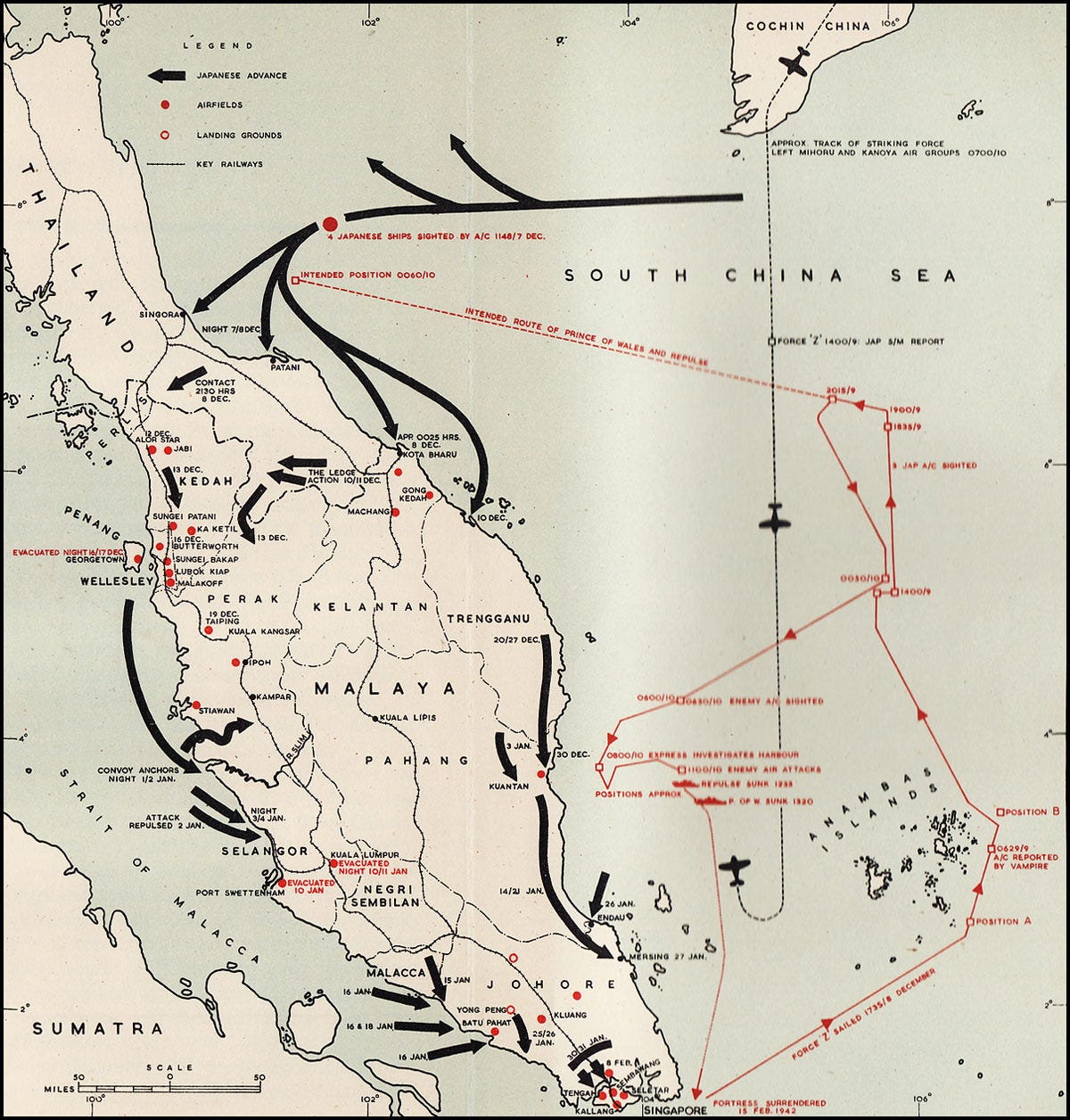
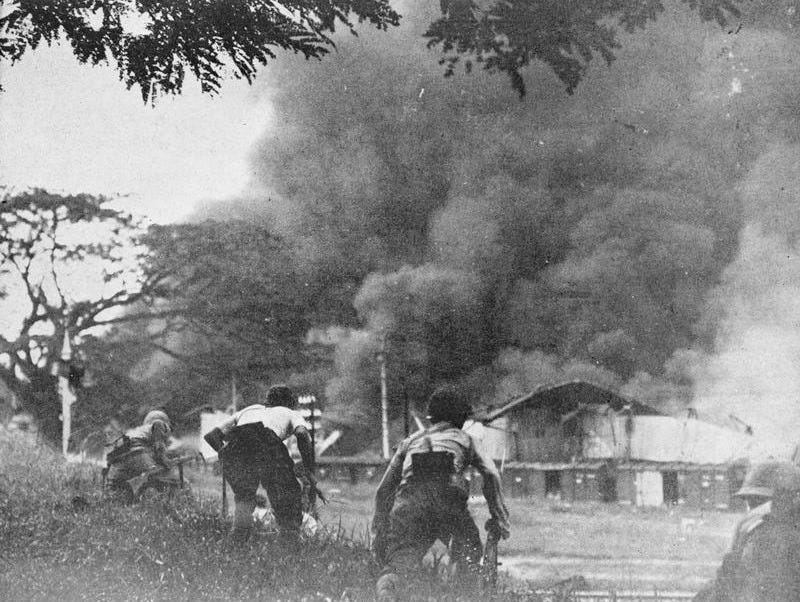
After years of growing tensions and months of fruitless negotiations, the Empire of Japan, desperate for the raw materials of Southeast Asia, decided on war against the Allies and the United States on 30th November 1941. A week later, just as the Imperial Japanese Navy attacked Pearl Harbour, the 25th Army invaded both Thailand and Northern Malaya.3 British Empire forces, often deployed poorly due to the need to defend badly-sited aerodromes, soon found themselves overwhelmed by the ferocity of the Japanese assault. In addition, pre-war British plans aimed at invading the south of Thailand (Operation Matador) to defend better positions north of the border came to nothing. Despite moments of heroism and occasionally stiff resistance, the defenders found themselves continually thrown off balance by the Japanese advance and forced into retreat southwards. Within days of the assault, the token Royal Navy ‘Force Z’, sent to Singapore as a deterrent before the invasion, was sunk by Japanese aircraft off the coast of Malaya. Japanese naval and air superiority steadily increased even as their ground forces overrun the defenders in a ‘driving charge’. By 31st January, British Imperial forces had been completely forced off the Malay peninsula, with only Singapore island itself remaining under the defenders’ control.
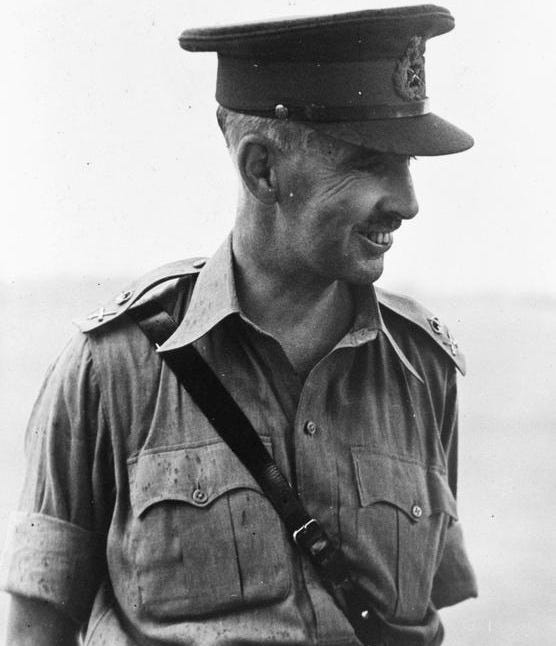
One would have thought that an Army of over 80,000 men would have been able to defend an island from an attacking force of around half that number. It was not to be. A bold Japanese attack prised open the hastily set-up defences and quickly overran the island, squeezing the defenders into Singapore city itself. Considering the situation untenable, British commander Arthur Percival surrendered to the Japanese on 15th February. In just over two months, ‘Fortress Singapore’ had fallen, and the British Empire’s long-held strategy for the defence of the Far East had utterly failed.
The Failure of Strategy
After the end of the First World War, it became clear to British policymakers that they could not afford to keep a battlefleet of sufficient size in the Far East to defend the Empire and deter the most likely threat – seen, even at this early stage, as being Japan.4 Instead, the ‘Singapore Strategy’ was devised. The basic plan was as follows.5 A naval base, able to support a major battlefleet and well defended, would be built in Singapore. If there was a war or significant threat to the Dominions and territories of the Empire, Singapore would hold until Britain sent a battlefleet from the Home Islands (‘Main Fleet to Singapore’) and then used be as a base from which the Royal Navy could launch out and defeat the threat (i.e. Japan). This strategy became the totem on which imperial defence of the Far East was based; a way of Britain guaranteeing the defence of the Imperial colonies and Dominions at minimum cost and political upset to either party.
However, the Singapore Strategy was hugely flawed, both in theory and execution. Theoretically, the Singapore Strategy only worked if Britain was not already at war in Europe, which obviously would be the priority for the fleet. However, it was also a reasonable assumption (especially by the late 1930s) that Japan would only attack British interests if the UK was already tied up in a war in Europe! To compound this, the execution could not even support the strategy as envisioned. Singapore naval base languished unbuilt for decades, the victim of cost-cutting and inter-service and inter-departmental rivalry.6 When it was finally built in 1938, the base did not have sufficient infrastructure to handle a major battle fleet in any case, nor was the island given appropriate defences to justify its description as a ‘fortress’.7
Over the late 1930s, as world tensions rose and war in Europe seemed more likely, it became increasingly apparent that the Singapore Strategy would not work as intended. Once war in Europe broke out, the basic tenets of the Strategy collapsed all together. The planning yardstick for how much time ‘Fortress Singapore’ was required to hold out until ‘Main Fleet’ arrived increased from a few months to over a year before being scrapped altogether. Despite the obvious difficulties and furious discussions over how to manage Far Eastern imperial defence, the Singapore Strategy itself was not retired – politically, too much was riding on it in terms of Britain’s relationship with the Imperial Dominions, especially Australia. Publicly, London insisted that the Singapore Strategy remained the extant policy almost until the end.
All strategy is political. However, Britain’s failure was to stick to a strategy for purely political reasons when militarily it was flawed from the outset and by the time war broke out had almost no hope of success.
The Disjunct between Policy, Strategy, and Operations
The issues with the Singapore Strategy filtered down to the dispositions on the ground. Malaya Command was not well-equipped or supplied for the task of defending Malaya and Singapore, nor was its operational plan well-thought out. Immediate pre-war decisions made the Royal Air Force the leading arm for the defence of Malaya and Singapore. RAF Far East was not supplied with the best equipment or personnel, and worse (without consulting the Army) decided to build airbases in indefensible positions. This, alongside the need to strongly garrison Singapore itself, then forced the Army to spread out across Malaya in poorly-sited defences rather than concentrating as a field army. Despite this, Malaya Command did plan for an invasion of Thailand – Operation Matador – but this fell through as a concept due to unrealistic political, strategic, and military assumptions.
Some of these issues were caused by scarce resources needing to be prioritised elsewhere, but many were due to the fundamental problems inherent in the overall strategy. Malaya Command was given a bad hand, but also played it badly by sticking to a plan that was flawed.
The Importance of Effective Coalitions and Teamwork
Malaya Command was not a British force. It was an Imperial coalition force, primarily made up of three different armies – the British Army, Indian Army, and Australian Army – and a multitude of ethnicities and nationalities. The officers of these forces, though coming from a similar military tradition, had different cultures and ways of operating, and often didn’t get on well with each other.8 Furthermore, training both pre-war and during the invasion was patchy and uncoordinated, with wildly different levels of quality across Malaya Command. Percival - admittedly not helped by his superiors - never managed to forge his disparate army into a cohesive force, and the British Empire suffered a catastrophic defeat as a result.
In any major war, NATO will fight together as an alliance. Close working relationships, common operating procedures and cultural understanding is crucial. Having worked in coalition and allied environments, I can say that this is never a given, and takes hard work to achieve.
Underestimating the Enemy
Prior to the start of the war, British politicians and military men consistently underestimated the Japanese. This was partly racial prejudice, and partly just generally poor intelligence gathering. Churchill made serious political gambles prior to the outbreak of war based on the optimistic assumption that Japanese leaders were naturally cautious. Japan’s war against China had not gone well, and British planners took from this that Japan was a second-rate force unsuitable for high-intensity ‘peer on peer’ warfare. Technologically, the Japanese were considered inferior, and their equipment was not rated as particularly effective. Even when there were objections to these characterisations within elements of the British military and intelligence, they were often dismissed in favour of more optimistic perceptions. High risks were taken on the basis of these assumptions.9
In the end, not only did the Japanese have material superiority on land, at sea and in the air, but more than anything else, comprehensively defeated the British Imperial forces on a qualitative level.10 Malaya Command wasn’t overwhelmed through sheer numbers or an ‘Asiatic horde’, but in almost all engagements completely outfought by a numerically inferior but tactically superior force.11
Effective intelligence is crucial in war. How often have western militaries underestimated the resolve and will of supposedly inferior forces, from the North Vietnamese to the Taliban and the Iranian regime? And, while the Russian military is currently doing quite badly in Ukraine, I wouldn’t want any European military becoming complacent about the potential threat of Putin’s war machine.
Civil-Military Cooperation (CIMIC)
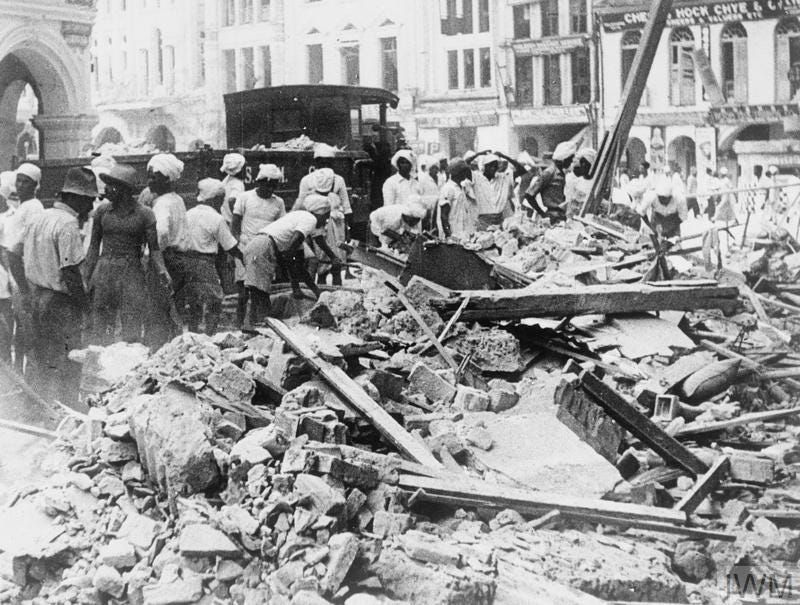
The importance of CIMIC often gets chinned off by military enthusiasts, presumably because it doesn’t involve enough shooty-shooty things to keep them interested. The Malaya Campaign is an excellent example of why CIMIC matters in conventional warfare. Despite being on ‘home turf’ the British Imperial Forces made very poor use of the civilian resources at their disposal. There was little serious effort made to mobilise local people into supporting the war effort, supporting them through civil defence, or setting up stay-behind forces of local guerrillas to harass Japanese supply lines.12 This was especially egregious as, though under colonial occupation, the civilian population of Malaya had little reason to welcome the Japanese - especially the ethnic Chinese population.
There were several reasons for this lack of effective civil-military cooperation. While there was a push from London to avoid disrupting the production of crucial rubber, which did hinder efforts, the primary reason was the prejudices and politics of colonial rule, made worse by lack of firm direction from London. These issues were compounded by the strained relations between the colonial civilian authorities and Malaya Command. While by the time Singapore itself was invested it was too late, better CIMIC and civil mobilisation prior to the war could have assisted the defenders a great deal, and Malaya Command’s failure to do so was notable.
Conclusion
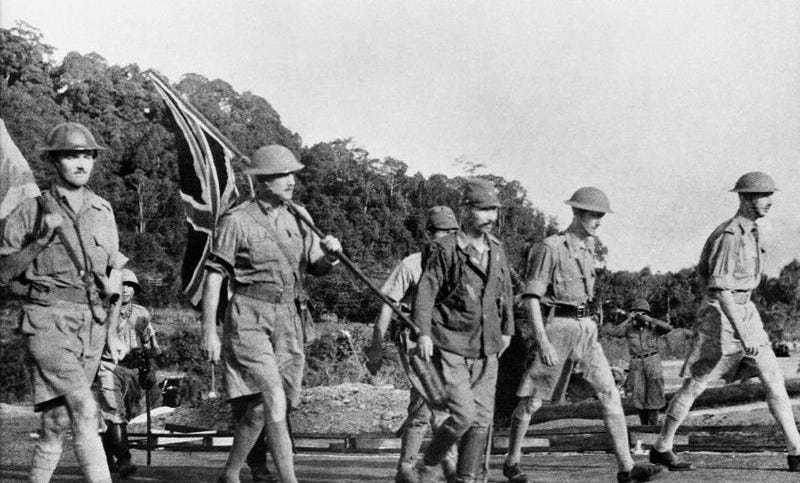
The British Empire lost Singapore due to a cacophony of failures from the micro-tactical all the way to the high strategic and political. No single person can be blamed; as Brian Farrell notes, it was the British military ‘system’ which failed. Decades of cuts, compromises and optimistic assumptions, alongside bad leadership and stretched resources, led to an utterly catastrophic defeat.
Have we fully learned the lessons of Singapore? Looking at the state of British defence planning and policy today, and our penchant for over-promising and under-delivering, I’m not entirely sure we have.
I enjoyed writing this piece. If people want more articles providing lessons from history, I’m more than happy to oblige - let me know in the comments below.
All the best,
Matthew
Cracking Defence is a reader-supported publication. If you enjoy my work, please like, share, subscribe, and if you are able, buy me a coffee to support my work. All and any support is hugely appreciated.
Bibliography
Bell, Christopher. “The “Singapore Strategy” and the Deterrence of Japan: Winston Churchill, the Admiralty and the Dispatch of Force Z.’ The English Historical Review, 116: 467 (2001), 604–634.
Best, Antony. British Intelligence and the Japanese Challenge in Asia, 1914-1941, Palgrave Macmillan UK, 2002.
Bridge, Carl. ‘The Malayan campaign, 1941–2, in International perspective.’ South Asia: Journal of South Asian Studies, 19:1 (1996), 169-182.
Farrell, Brian. The Defence and Fall of Singapore 1940-1942. Monsoon, 2019.
French, David, Raising Churchill’s Army: The British Army and the War against Germany 1919-1945. Oxford University Press, 2000.
French, David. ‘British Military Strategy.’ In The Cambridge History of the Second World War, edited by John Ferris and Evan Mawdsley, 28–50. Cambridge University Press, 2015.
Kennedy, Greg (editor). Imperial Defence the Old World Order 1856-1956. Routledge, 2008.
Prior, Robin. Conquer We Must: A Military History of Britain, 1914-1945. Yale University Press, 2022.
There are disagreements in the historiography over how many troops became prisoners of war. I’ve gone with Brian Farrell’s rough estimation in The Defence and Fall of Singapore.
I’m mostly referring to Britain here, but it looks like the Aussies do pay more attention to it.
Due to timezone differences, technically the 25th Army attack on 8th December happened before the 7th December attack on Pearl Harbour.
Britain and Japan were actually allies at this time, though the Anglo-Japanese Alliance was fraying and soon to be replaced by the Nine-Power and Four-Power Treaties at the Washington Naval Conference of 1922.
The story of the Singapore Strategy is a complicated one on which volumes of material have been written. If people are interested, I’m happy to write up another article specifically on the development of the strategy.
Ironically, Churchill was Chancellor of the Exchequer in the late ‘20s when the decision was made to delay and reduce the size of the base for cost reasons…
Interestingly, apparently this was a British Army administrative term rather than a description of capability, but politicians (not unreasonably) took it to mean the latter.
The Australian commander General Bennett was a particularly difficult character who had a habit of blaming the British and especially the Indians on racial grounds.
Antony Best’s book on British Intelligence and the Japanese Challenge (see bibliography) is well worth a read if you are interested in this.
Despite the classic image of the Japanese being very lightly equipped and the British Army being heavily mechanised, it was only the Japanese that deployed tanks in Malaya. While not decisive overall they did prove a significant force multiplier in several engagements of the campaign.
By the way – this has nothing to do with the Japanese being natural ‘jungle fighters’, which you sometimes hear. Where the hell are the jungles in Japan?
Considering how stretched Japanese supply lines were due to the rate of advance, stay-behind guerilla forces with local knowledge would have been of huge value.
The Fall of France ensured the Royal Navy was unable to deploy a sufficient number of surface vessels to Singapore. The Royal Navy comfortably covered the loss of the French in the Med, but that threw out pre-war planning. It was always assumed the French would keep the Germans in check.
Put another Way, the Royal Navy could fight in two theatres, but not three.
Very nice summary and I appreciate the map. History is a great teacher, but only if one is willing to read and learn from it.