
Disaster in Iraq
Lessons learned from the loss of Kut Al Amara 1916

On the 29th April 1916, the British Indian Army’s 6th (Poona) Division surrendered to the Ottoman Empire at Kut Al Amara in Iraq. Over 13,000 men and camp followers, weakened by hunger and disease, fell into captivity; of those, many thousands would die after the Ottoman Army forced them on what amounted to a death march. Another 23,000 or so soldiers became casualties as part of the failed attempts to relieve 6th Division. Following soon after from the defeat at Gallipoli, Kut proved another humiliating defeat for the British Empire in the Middle Eastern theatre of the First World War, one so bad that it led to an official parliamentary inquiry within the midst of the war itself.
The Siege of Kut stands out as one of the most notorious British defeats of the First World War. How did it come about, and what lessons can be learnt?
What happened
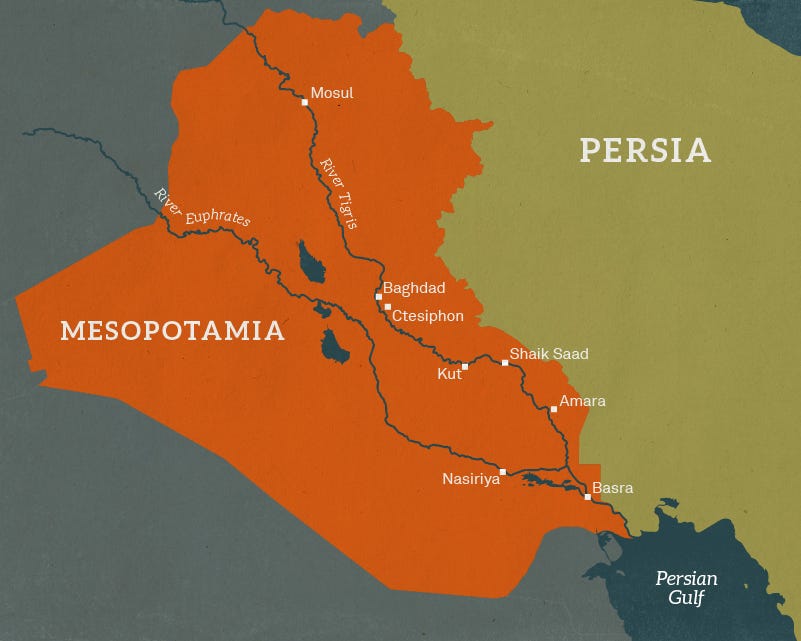
After a short period of neutrality, the Ottoman Empire entered the war in late October 1914 on the side of the Central Powers. On 6th November, a day after Britain officially declared war against the Sultanate, troops of the British Indian Army landed in Mesopotamia - then a backwater Ottoman province, now modern-day Iraq. The ostensible reason for the invasion was to secure the oil fields of Abadan Island, run by the Anglo-Persian Oil Company; while this may have been a factor, most authors see the true reason being more politically-motivated. Britain needed to keep the rest of the Arabian Gulf and Persia secure to protect India, and securing the Mesopotamian coastline was part of that function. Furthermore, British power in the region heavily depended on prestige, rather than raw material power; striking a blow against the Ottomans would be a way of demonstrating Britain’s supremacy and warding off the potential of Muslim unrest in the British Empire (forever a concern of the Indian government).
British Indian forces - ‘Indian Expeditionary Force D’ - rapidly secured Basra.1 However, in a complicated set of decisions (see below), ‘mission creep’ set in, and territories to the north of Basra were seen as necessary acquisitions for the war effort. In a highly-amphibious campaign, Force D progressed up the Tigris and Euphrates, defeating the weak and demoralised Ottoman garrison in a number of battles.2 By mid-1915 the entire vilayet (province) of Basra was under British occupation, and commanders started to eye the rest of Mesopotamia, especially Baghdad. Advancing once more, the vanguard of Force D - 6th Division under Major General Charles Townshend - made good progress before finally being fought to a standstill at the Battle of Ctesiphon in November 1915, only around 40km from Baghdad.3 Though both armies initially decided to withdraw, the Ottoman force quickly reversed their decision and chased Townshend’s force back to the town of Kut Al Amara, where he decided to make his stand, confident that he would be soon relieved by friendly reinforcements.
This proved to be a fateful decision. The Ottomans successfully invested Kut as well as pushing south to block off the route for British relief efforts. 6th Division was forced to hold out for months, as successive relief attempts by a logistically-challenged and badly-led ‘Tigris Corps’ failed bloodily.4 Supplies in Kut started to run low, hunger became acute and disease ran rampant. Unable to break out or be relieved, and leading a starving, under-equipped army, Townshend finally surrendered on 29th April 1916. Infamously, he was taken into relatively comfortable captivity, while his men were faced with a brutal death march and maltreatment at the hands of their Ottoman captors.
How did the British Indian Army suffer such a brutal defeat after a string of victories?
Policy and Strategy
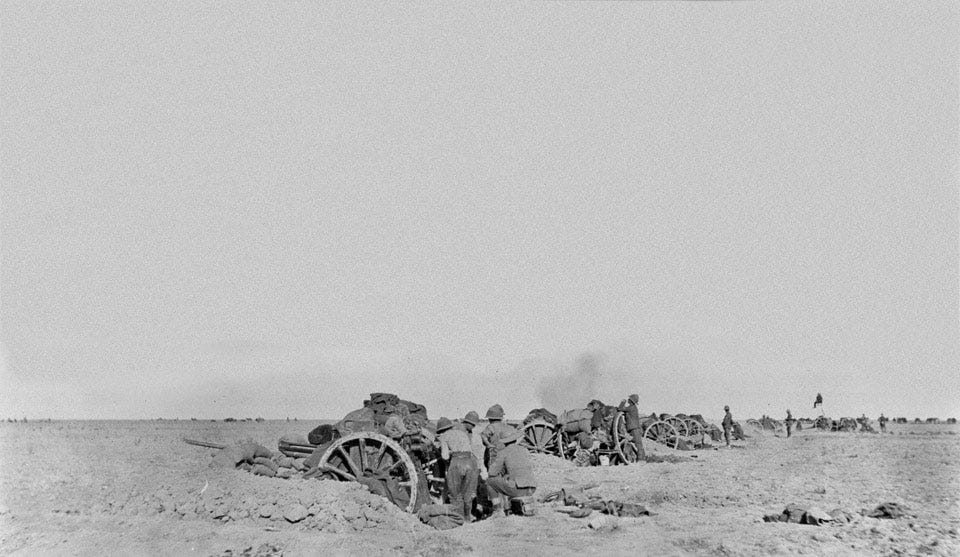
A key structural cause of the defeat in Mesopotamia was the confusing - and confused - political and strategy decision-making process above it. Unlike the rest of the war, the Mesopotamia Campaign was not held under the direct authority of the War Office in London, but the British Indian Government based in Simla. While the Indian Government answered to London through the India Office, it soon became clear that the various decision-making bodies had different plans and strategic priorities in mind when it came to Mesopotamia. For most of the period, London saw Mesopotamia as a strictly limited and distinctly de-prioritised campaign fought by the Indian Army, and wanted to keep it a ‘safe game’. Simla - and, sometimes, the India Office - though initially lukewarm, soon developed grander plans and became ambitious to expand the scope of the war. Many of them even saw Mesopotamia as a potential post-war colonial addition to the Raj. Furthermore, the main commander of Force D in Mesopotamia - Sir John Nixon - was a particularly ambitious and optimistic ‘thruster’, who continually pushed for expansion North, both with and without the explicit agreement of either London or Simla. London and Simla seemed to align more concretely following the disaster of the Gallipoli campaign, when London suddenly took greater interest in a potential ‘raid’ and ‘temporary occupation’ of Baghdad to restore British prestige. However, these decisions were made on flawed understandings of the information provided by the commanders in the field, and London never committed to a definite policy on Baghdad, letting events on the ground overtake them.5
To make matters worse, though the Indian Government developed significant ambitions in Mesopotamia, they didn’t want to provide the resources to match that ambition. While this is partly due to the lack of available materiel in India, there is significant evidence that Simla tried to lump the bulk of the reinforcement and logistical burden on the War Office in London.6 By comparison, the War Office was unsurprisingly loath to provide resources for a peripheral theatre, especially during the 1915 Munitions Crisis and the ongoing Dardanelles Campaign. While eventually London would cough up another two divisions for Mesopotamia, they would not provide the logistical support required, and Simla was reluctant to fill the gap. London and Simla fought over resource allocation, and the men of Force D suffered as a result.
Overall the decision-making for the Mesopotamia campaign was muddled, confused, and an excellent example of ‘too many Chiefs’ with diverging priorities and attention spans. Policy was never entirely clear, and often found itself chasing events rather than directing or shaping them.
Defence and Security policy and strategy are always complicated processes requiring multiple actors. Unfortunately, bureaucratic interests are always present, leading to either unhelpful compromise and prevarication (see British defence policy documents) or complete deadlock (e.g. the current woes over the Defence Investment Plan). Clear lines of authority and strong leadership is required to overcome such challenges.
Logistics, Logistics, Logistics
If there was ever a campaign in which the old adage ‘professionals talk logistics’ applies, it is the Mesopotamia Campaign. From the strategic all the way to the tactical, logistic support was inadequate, with appalling consequences.
Iraq, as I well know, is an unforgiving environment to operate in - it was even more so in the First World War. Parched desert plains, extreme heat, but also often also muddy swamps, marshes and sudden flash floods, especially around the Shatt Al Arab.7 Spread by mosquitos and sandflies, numerous diseases were commonplace, not least cholera, dysentery, malaria, and typhus. In the early 20th Century the region was underdeveloped with limited infrastructure and no railways. The main forms of transport used were boats, often of traditional build like rafts and canoes, and pack animals or carts.
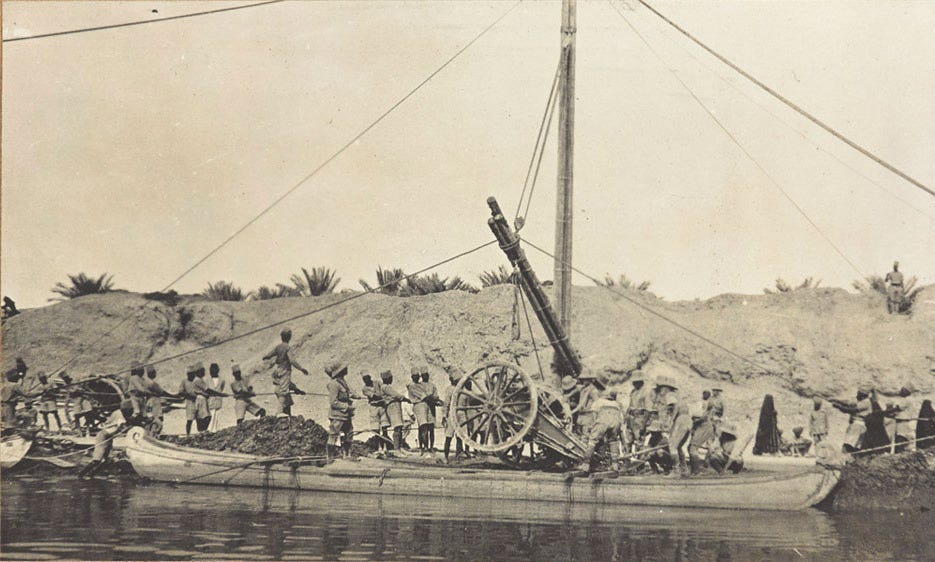
The environment - and the opportunistic predations of Arab tribesmen - made logistics a complete headache for the British Indian Army. However, they did not do themselves any favours. The campaign was sustained on an absolute shoestring, exacerbated by the parsimony of the Indian government and the reluctance of the War Office to release resources for the campaign. The Indian Army - fundamentally a garrison force designed for fighting on the Indian Northwest Frontier - was not structured for long expeditionary campaigns, and severely lacked sufficient (and trained) administrative and military staff to cope with a complex operation fought along supply lines hundreds of kilometres long. The expeditionary force was short of all sorts of required equipment from personal kit like suitable tents and mosquito nets all the way to enough artillery and aeroplanes.
Force D was ravaged by disease and illness partly due to insufficient nutrition and a cripplingly severe lack of medical staff and supplies throughout the force.8 Despite being a rigorously segregated multi-ethnic army, the Indian Army failed to provide for all the dietary requirements (both culturally and nutritionally) of the soldiers under their command - something that would lead to acute misery in Kut. Sufficient supply of boats (of all kinds) and pack animals was severely lacking, which led to a breakdown in tactical logistics and particularly hampered the failed efforts to relieve the siege.9 When the army in Mesopotamia was eventually strengthened, it did not receive a sufficient strengthening of key enablers, leading to an even worse spiral of logistical failure. The weakness of the Ottoman opposition up to Ctesiphon allowed Force D to initially paper over its structural issues, but as soon as the first defeat occurred the system completely broke down.
The United States military aside, much of NATO - the UK included - lacks sufficient ‘enablers’ especially logistical, engineers and medical troops. These forces are critical to sustaining the fight in resource-intensive modern warfare. The Mesopotamian Campaign and the loss of Kut provides a salutary lesson of what happens when logistics falls apart.
Poor Intelligence
As ever, so much that goes wrong in wartime can be attributed to poor intelligence. British intelligence of all kinds was generally poor during the Mesopotamian Campaign. There was insufficient understanding of Mesopotamia itself and over-optimistic assumptions as to how the local Arab population would react to the British occupation.10 Tactically, not only did the British have a poor grasp of the actual forces arrayed against them - at one point vastly underestimating the total number of troops at Ctesiphon - but also underestimated the quality of their opponent, made worse by ‘victory disease’ following a continual string of successful engagements over 1915. While the third-rate Ottoman garrison faced at the start of the campaign had been quickly outfought, by the time of Ctesiphon the Turks had reinforced the theatre with higher-quality forces that proved a match for the British. The perception at the time - and still common today in popular history - is that the Ottoman Army had tough soldiers (‘the hardy Turk’) but was otherwise badly led, trained, and equipped. By contrast, as argued by Edward Erickson, despite undoubted material deficiencies, the Ottoman Army proved a skilful opponent on multiple occasions throughout the war, and indeed, from Ctesiphon onward in Mesopotamia fought the British to a standstill.11
I’ve discussed the historic tendency for western forces to underestimate (especially non-western) enemies in my piece on Singapore. We also have a habit of badly misunderstanding the environment we fight in - see the Iraq and Afghanistan Wars of the 21st Century. Understand the human and physical environment you are fighting in and never underestimate the enemy.
Aftermath and Conclusion
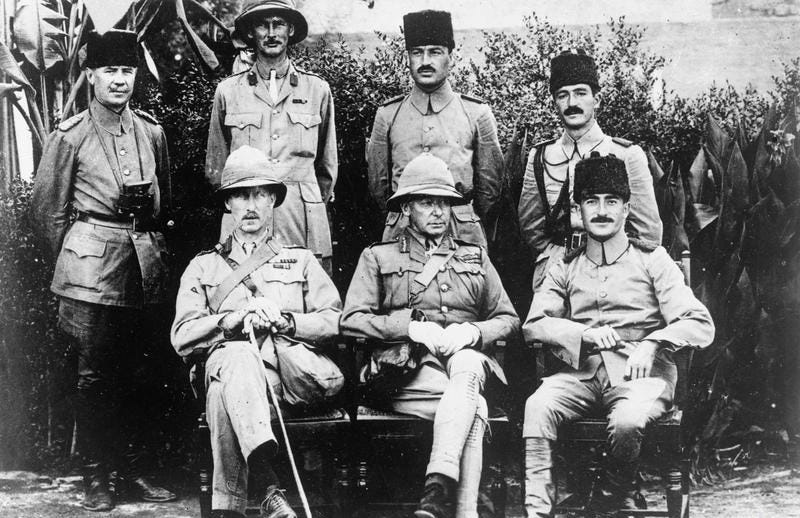
To its credit, in the aftermath of Kut Britain rapidly made changes to the Mesopotamian war effort. The War Office took direct control of policy from early 1916, and chains of command were reformed and strengthened between London and India. A new British Army commander with experience of both the Western Front and the Dardanelles - Stanley Maude - was put in charge of the campaign, and went on to conquer Baghdad in 1917. Transport was prioritised, and a new light railway was rapidly constructed to support the war effort. Better equipment, including greater firepower, started to flow into the theatre, and the military staff learned to fight modern warfare effectively. The Mesopotamia Campaign would eventually be won, leading to the troubled and violent creation of the Iraqi Mandate after the war.
While not as catastrophic on paper as Singapore, the failure of Kut was avoidable. Bad policy, uncertain authority, terrible logistics and inadequate intelligence led to thousands of men losing their lives. Most critical was the lack of effective logistical and medical ‘enablers’ leading to the collapse of the British military machine. We still don’t prioritise enablers to the extent that we should, especially as the British military remains an expeditionary force. Indeed, the Strategic Defence Review highlighted shortcomings in British military medical provision and lack of joined-up thinking with the NHS. The lessons of Kut Al Amara suggest that we should be worrying a little more about field hospitals and port infrastructure, rather than just focusing on tanks, ships and drones.
This was a lot of fun to research. If everything goes well, I’m going to continue writing historical pieces to complement my more contemporary analysis - let me know what you think!
All the best,
Matthew
Cracking Defence is a reader-supported publication. If you enjoy my work, please like, share, subscribe, and if you are able, buy me a coffee to support my work. All and any support is hugely appreciated.
Bibliography
Crowley, Patrick. ‘Kut 1918 - Why it should be remembered.’ Journal of the Society for Army Historical Research 97, no. 388 (2019): 67–77.
Erickson, Edward J. Ottoman Army Effectiveness in World War 1. Routledge, 2007.
Fisher, John. ‘Sir Arthur Hirtzel and the Pax Britannica in the Middle East.’ Diplomacy & Statecraft 32, no 2 (2021): 263–88.
Johnson, Robert, and James Kitchen, eds. The Great War in the Middle East: A Clash of Empires. Routledge, 2019.
Mesopotamia Commission. Report of the Commission Appointed by Act of Parliament to Inquire into the Operations of War in Mesopotamia. HMSO, 1917.
Prior, Robin. ‘The Ottoman Front.’ In The Cambridge History of the First World War, edited by Jay Winter, 297–320. Cambridge University Press, 2014.
Prior, Robin. Conquer We Must: A Military History of Britain 1914-1945. Yale, 2022.
Roy, Kaushik. Indian Army and the First World War: 1914-18. Oxford Academic, 2019.
Townshend, Charles. When God Made Hell: The British Invasion of Mesopotamia and the Creation of Iraq, 1914-1921. Faber, 2011.
For awareness, in this period the British Indian Army was roughly 1/4 British units, and 3/4 Indian units with British officers. All mid-ranking and senior officers were, of course, British.
For those of you interested in amphibious and riverine warfare, the Mesopotamian Campaign makes for a fascinating case study.
Also known as the Battle of Salman Pak.
The tactical performance of the British Indian Army was mixed throughout the campaign. There were some very strong performances, including by 6 Division, but unfortunately this was not matched by the Tigris Corps in 1916.
If this short explanation seems confusing and inconsistent… well, that is because the decision-making process was as well!
The British Indian Government was notoriously tight-fisted and didn’t like spending on defence. A common theme in British history!
Of interest, Iraq used to be far more marshy than it is today, due to significant draining over the 20th century, especially by Saddam Hussein.
The paucity of sufficient medical support is emphasised in every single account I’ve read of the campaign. Force D was ravaged by disease in a way that you’d expect from a 17th century army, rather than one at the dawn of the 20th.
In a telling anecdote, despite the obvious importance of river transport, extra boats were not requested by Force D until eight months into the campaign!
The Arabs did not like the Ottomans. However, nor did they like the British.
For those of you interested in the Ottoman theatre, I highly recommend reading Erickson’s Ottoman Army Effectiveness in World War 1 (see bibliography) for a revisionist take on the period.
The part most accounts skate over is exactly the one you've made the spine: the London-Simla split, Nixon pushing north on his own initiative, policy chasing events instead of shaping them. That's the right level to fight on.
One thread worth pulling harder. You note the real aim was never the Abadan oilfields but prestige — demonstrating supremacy, heading off unrest in the Raj. Grant that, and the "mission creep" stops looking accidental. A campaign to secure an oilfield ends when the oilfield is secured. A campaign to demonstrate supremacy has no line on the map that says enough, because the objective was never on the map. Nixon could keep advancing precisely because nothing in the war aim told him to stop. Divided authority didn't cause the drift so much as guarantee no one had standing to halt it.
Which makes Kut less an avoidable failure of execution than the natural terminus of a war fought to prove a point rather than take an object. The front advances until something breaks it. Wars sold as demonstrations of resolve still end this way, for the same reason: the object recedes as you approach.
Very interesting and compact overview of a very unpleasant campaign. Apparently everyone forgot (or never learned?) the lessons learned from the various campaigns in Egypt and Sudan not that long before. Yikes! 😬
Along with your discussions on intelligence and logistics failures, this also gets right at the primacy of a clear Objective in all types of operations (if you don’t know where you are going, how do know when you have arrived or what you need to do it?). Also, assumptions, whether they are conscious or unconscious, are the Mother of All Screw Ups! Fortunately, as you also discuss, the follow on commander had a bunch of bad examples to profit from.