
In Kyiv
A visit to the heart of Europe's defence against Russia

N.B. - I’m not Ukrainian, and this was one snapshot of Kyiv. Once you’ve read it please do go also have a look at some of the many excellent Ukrainian writers online – Margo Gontar and Anastasiia Lapatina are two that are active on Substack.
I haven’t written much in depth about Ukraine on this Substack, because until now I hadn’t been there. I’m not the greatest fan of reporting or analysis from thousands of miles away without first-hand experience, as there is only so much you can glean from secondary or modulated digital sources.
This trip was a long time coming - I had been wanting to go to Ukraine for ages, but service in the British Armed Forces precluded me. Military officers cannot visit ‘interesting’ places unless they have a professional purpose, and as my area of operations was primarily the Middle East, Ukraine was off-limits for me until I hung up the uniform.1 I also find the idea of warzone tourism morally unpalatable, however tempting. Hence, when I was invited out of the blue to attend a conference in Kyiv, I jumped at the opportunity, and soon found myself on the long train into the heart of Europe’s defence against Russia.
Over four years into Russia’s full-scale invasion, Kyiv remains a vibrant city. While like any major city there is a lot of grey industrialism, the centre is very handsome - a somewhat eclectic mix of neo-classical buildings interspersed with gorgeous orthodox churches and the odd 20th century modernist structure. The streets are busy with dapper urbanites, especially on the weekend, as are the shopping malls, bars, and coffee shops.2 At times, one could squint and almost forget this is a city at war, though the signs soon become starkly apparent. First are the advertisements, which alternate between promoting luxury goods and encouraging sign-ups for the military or civil defence forces.3 Then it is the number of people (mostly men) wandering around in military uniforms, and the occasional heavily-armed checkpoints (think: armoured cars and heavy machine guns) outside certain buildings. And finally, too often, the reminders of tragedy – the dedications to the fallen around the Maidan or on the Alley of Heroes of the Heavenly Hundred, and the alarming number of young men seen on crutches or with prosthetic limbs. The war might not be all-consuming in Kyiv, but it is ever-present.
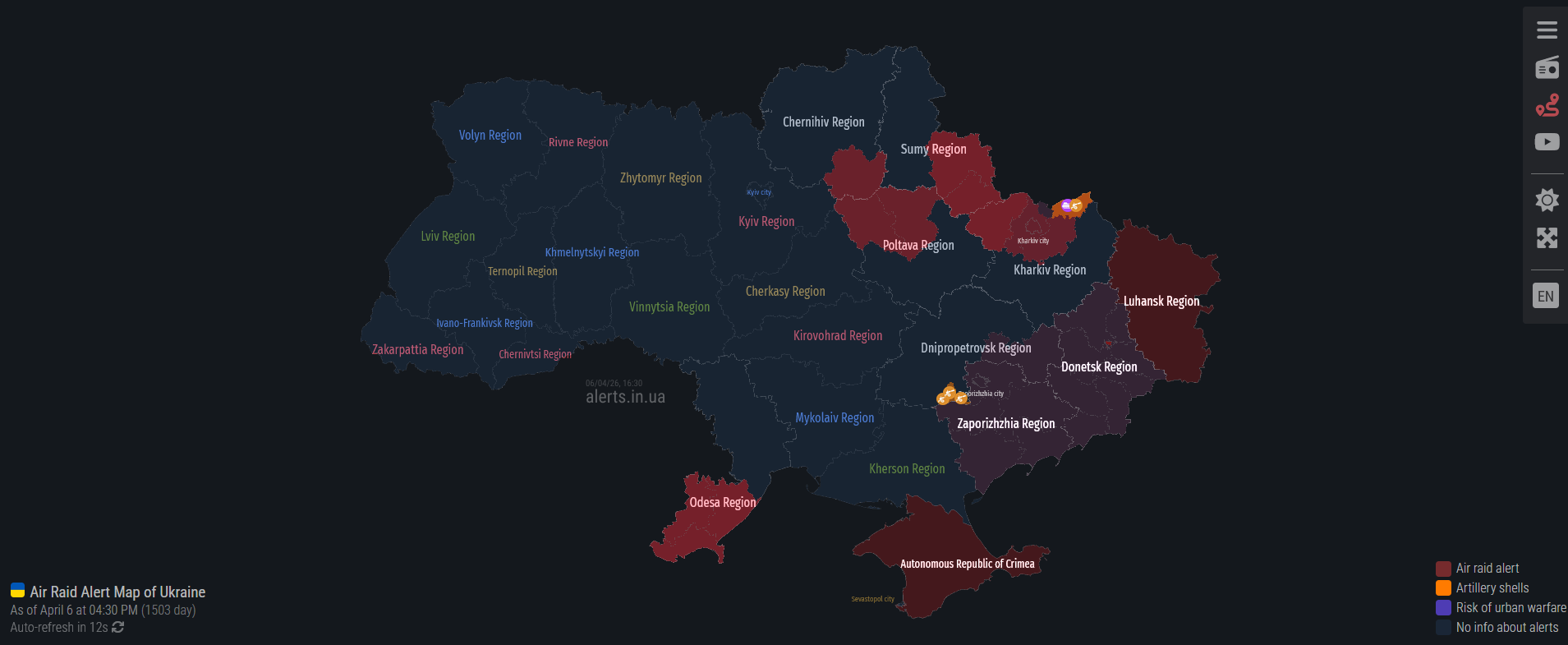
Of course, the most direct reminder that Ukraine is a country at war are the air raid alerts, which were frequent. This was not the first time I’ve experienced ‘incoming’ – my tour of Iraq included mortar fire and drone warnings – but the sheer number of alerts in Kyiv was noticeable. Even after only a few days I developed a sense for the rhythm of air raids, which mostly occur at night or in the morning. Drones are relatively slow-moving, so once detected people and Ukrainian air defences have more time to react.4 The most potentially lethal, and annoying, are the alerts warning of the take-off of a MiG-31K jet armed with a ballistic missile. Due to their range and speed, these can hit almost anywhere in Ukraine with very little warning, and so most of the country will be pinged with an alert.5 Talking to residents of Kyiv, there appears to be two schools on thought on how to react. The first argues that, due to the latent threat, it is best to get under serious hard cover as quickly as possible. The second instead suggests that a ballistic missile goes at such speed that there is little point in worrying about shelters – if you get hit, well, God had it in for you that day. This fatalistic approach does not diminish the genuine danger but gives an indication of how people view the threat.6 It is also an act of resistance to go on with daily life regardless, particularly as the Russians purposefully fly MiG-31s around, especially in the small hours on the weekends, simply in order to fuck with people. Because of course they do.
Resilience is what I was most interested in on this trip, especially as Ukraine has now endured four years of full-scale war. How do people stay motivated, and how does their morale remain strong in the face of continual hardship? In First World War studies, much is made of the ‘re-mobilisation’ of societies in 1917 and 1918. I was interested to see if, and how, Ukrainians have ‘re-mobilised’ themselves for their own existential war.
This is especially true considering the utterly brutal winter that Ukrainians have endured. While it had been commented upon in the western press, thanks to the geopolitical soap opera emanating out of the United States serious coverage was lost in the noise. However, everybody I spoke to emphasised just how truly appalling the winter of 2025-6 had been, and how difficult life was in the extreme cold as Russians continually targeted Ukrainian energy infrastructure.7 I did wonder whether much of the energy I felt across Kyiv came from a collective sense of relief at having survived such a horrific ordeal.
The frontline, by contrast, was not really discussed while I was there. This may have been purely happenstance and the nature of my conversations, but I did get the sense that tactical changes, so popular in western commentary, were of less interest to many in Kyiv. One of the reasons might be that Ukraine is so damn big. Kyiv is over 500km from the main front lines in Donetsk oblast, and itself a similar distance from the western-most reaches of Ukraine. In that context, small tactical changes across the frontlines of a few kilometres may seem less significant in the grand scheme of things, and certainly less pressing than quotidian survival during the winter.8 I imagine it was not dissimilar for Londoners or Parisians hearing about the Western Front in 1917.
When asked about the broader outlook for the war, most Ukrainians spoke with an air of quiet determination, seasoned with dry humour. None of them thought that the war would be over soon, regardless of what various world leaders and pundits might say. The focus, at least in my discussions, tended towards the medium and long-term, whether regarding economic partnerships with European nations (the USA was rarely discussed) or the outcome of the war. One individual that I spoke to dryly noted that, as far as he was concerned, Ukraine had been in conflict with Russia for over two centuries – what was another few years in that timescale? Ukrainians in Kyiv don’t seem to be holding their breath for developments in international diplomacy - can you blame them? - and instead seem more focused on long-term endurance against Russian aggression. That people were still partying, going on weekend excursions, and creating meaningful art are testament to this deep resilience.9
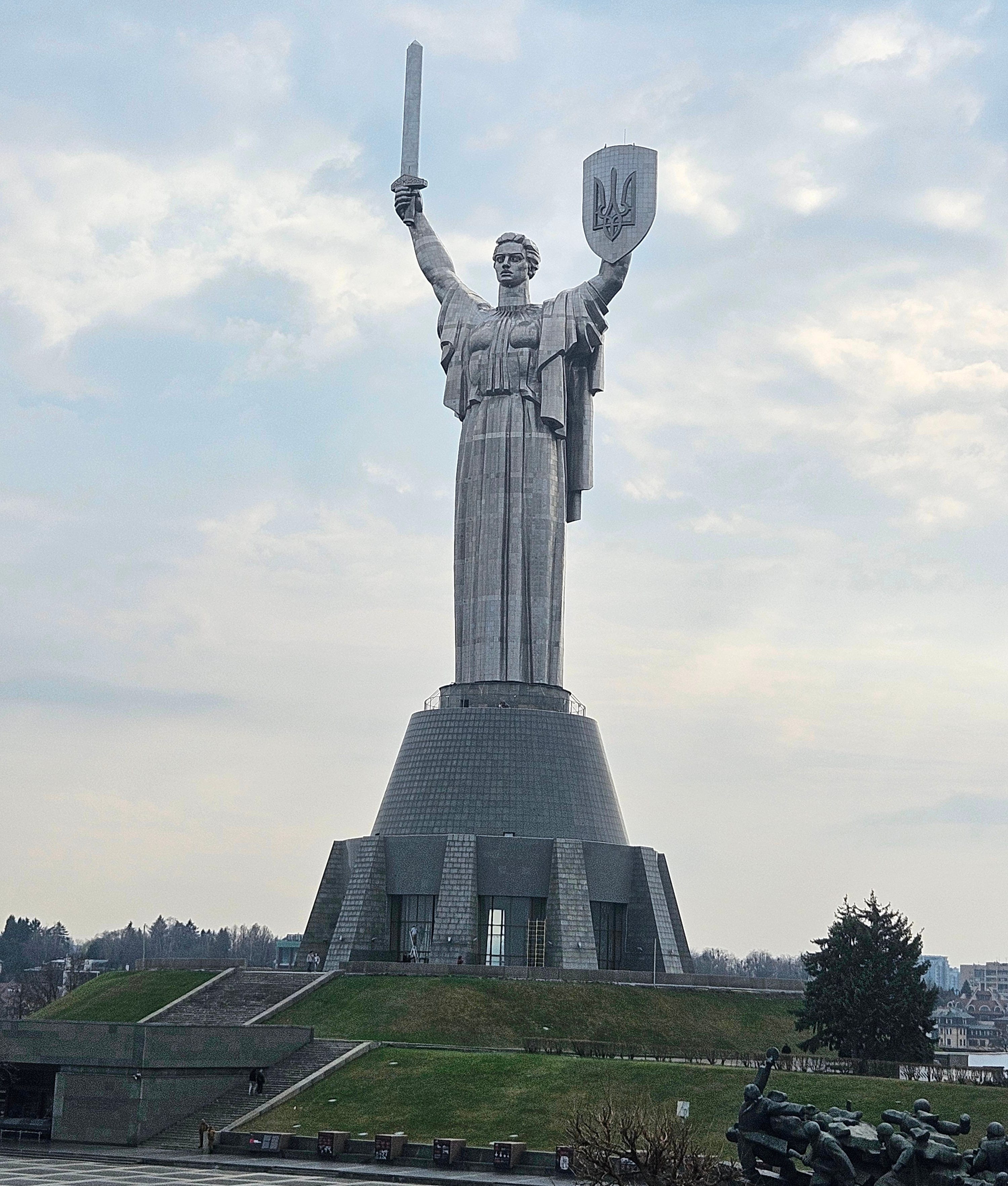
Indeed, a surprising amount of time on my trip was taken up by art and culture. I made excellent connections with the magnificent men and women of the Ukrainian Cultural Forces, who were kind enough to take me around their premises, and I also happened to visit several art museums and exhibitions. My thoughts on this are voluminous enough that I will soon write another article dedicated to the subject (look forward to that), but suffice to say that modern Ukrainian art is vital, in all meanings of the word, and possesses an urgency that I find is often lacking in much contemporary Western art. I saw some of the best in the National Museum of the History of Ukraine in the Second World War, a huge sprawling complex of museums and parks that includes the awe-inspiring ‘Motherland’ monument. The interspersal of art and war materiel from both the 1940s and today was powerful and deeply sobering. The fact that I visited on the anniversary of the 2022 Bucha massacres made it even more so.
Alas, my visit was not long enough. I’ve not received all the answers I would want – how could I? – and I fully intend to go again, and hopefully visit more of Ukraine outside Kyiv. There is still so much to learn, and so much to say. Some things I am sure of, however – the Ukrainian will to resist is steel-strong, their culture is flourishing, and any idea that they are about to cave in to Russian aggression is for the birds.
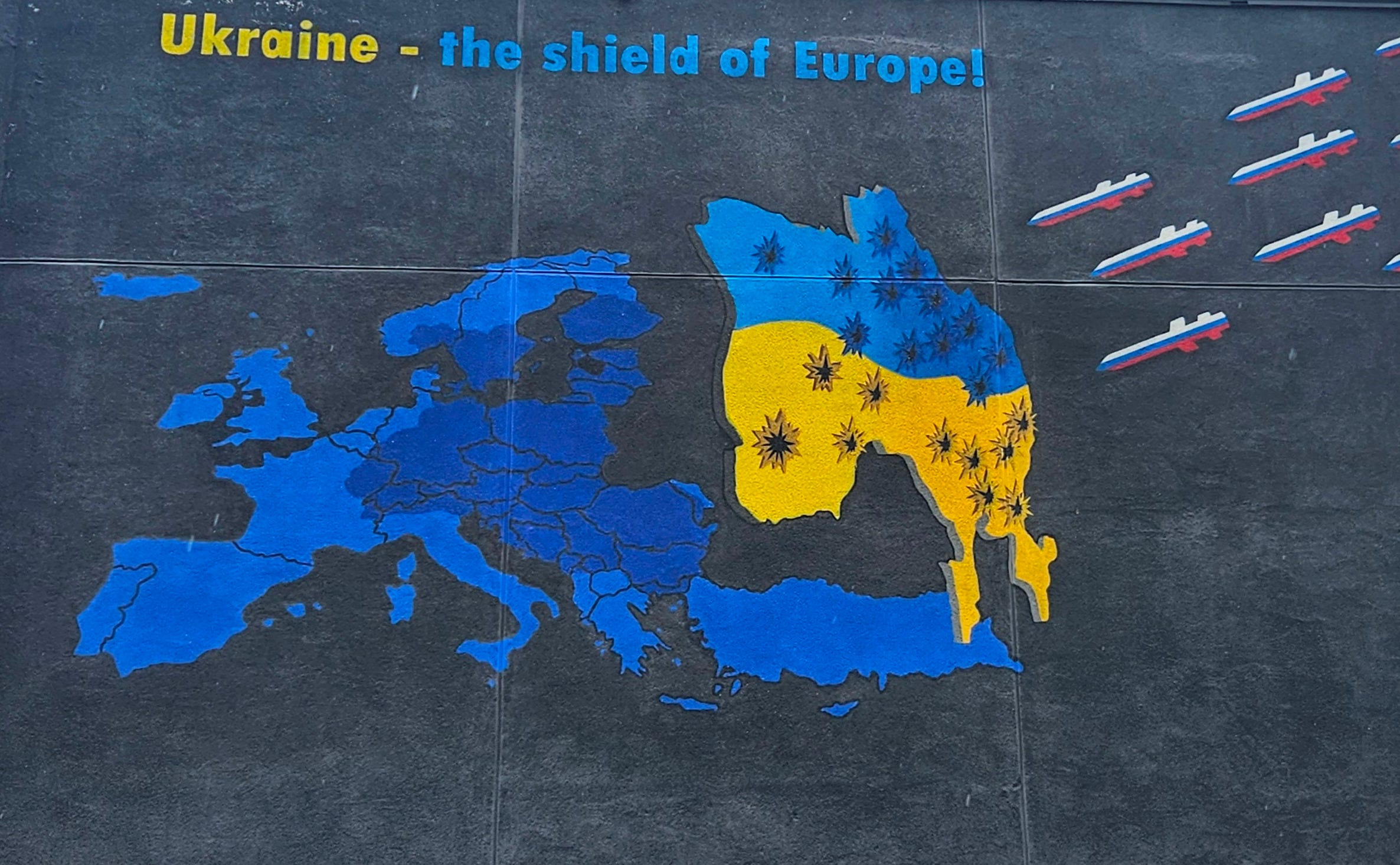
A final point, which is not obvious until you are there. The massive ‘Motherland’ monument, with its sword and tryzub-emblazoned shield? It does not face west, as one might have thought for a Soviet-era monument, but east across the Dnipro River, defiantly challenging Russia. A perfect physical manifestation of Ukraine’s role as the shield of Europe.
Cracking Defence is a reader-supported publication. If you enjoy my work, please like, share, subscribe, and if you are able, buy me a coffee to support my work. All and any support is hugely appreciated.
This is generally more to do with the threat of espionage rather than physical danger. I still operated off a burner phone, just to be cautious. Old habits die hard.
An important sidenote: the quality of coffee in Kyiv is absolutely top-notch – I honestly didn’t have a bad flat white the entire trip. People take their caffeine seriously there.
There were recruitment adverts for the Ukrainian services in general, but also for individual units and brigades, which I have always found interesting.
This only relates to Kyiv – I know the situation can be quite different elsewhere in the country, especially in the war-torn east.
I soon came to hate MiG-31s.
For what its worth, I never actually went to an air raid shelter - my unofficial personal air raid policy was to do whatever the Ukrainians around me were doing. To keep my lawyer happy, do not take this as advice…
As I was on Ukrainian internet, it was noticeable that the algorithm kept pushing me adverts for electrical generators, which I imagine were in extremely high demand all winter.
This is not in any way to degrade how important those changes are to the Ukrainian troops on the front line, and what they suffer in order to keep the Russians from advancing any further. For a harrowing portrayal of the experience, watch 2000 Meters to Andriivka.
Fun fact: I was invited to an all-night lock-in DJ set, though (perhaps stupidly) I declined as I had still had a full day of conference the next morning and was trying to be professional. I probably should have just done it for the experience.
You would have been interested in Ukraine Unbroken at the Arcola in Dalston - a series of five short plays exploring different experiences of war. Worth keeping an eye on their programme - they've been staging quite a few works reflecting on conflict recently.
Sounded like an incredible experience Matthew 🙂👍. Thank you for sharing.