
The World Outside Trumpland
Developments this week you may have missed

Happy New Year!
To start, an evergreen meme:
The year has started with a bang - several bangs. Surprising to some, not all have to do with the United States. You’ve all read about Venezuela and Greenland. Truckloads of people have written about it - I’m not going to bother doing the same. Instead, I’d like to highlight a few other interesting developments - primarily Middle Eastern - in the foreign policy and security space that are worth keeping an eye on.
Protests in Iran
This one has been bubbling away for a few weeks but is now growing in intensity. There are significant protests across Iran, including in Tehran - originally over economic grievances, but now more general dissatisfaction with the government. Yesterday there was a major internet blackout - quite likely a heavy-handed attempt at censorship by the Iranian regime. If nothing else, the government seems nervous.
It should be noted that protests are not uncommon in Iran, even large-scale ones. The Islamic Republic has also historically proven itself far more resilient than many would hope for, doggedly staying in power even in the face of massive unrest and economic difficulty. As such, I don’t think anyone is comfortable yet suggesting this round of protests will lead to anything different. Nevertheless, Iran has had a particularly bad past year, not least getting the metaphorical shit kicked out of it by Israel and the USA back in June. Definitely a story worth following.
Air Strikes and Clashes in Syria
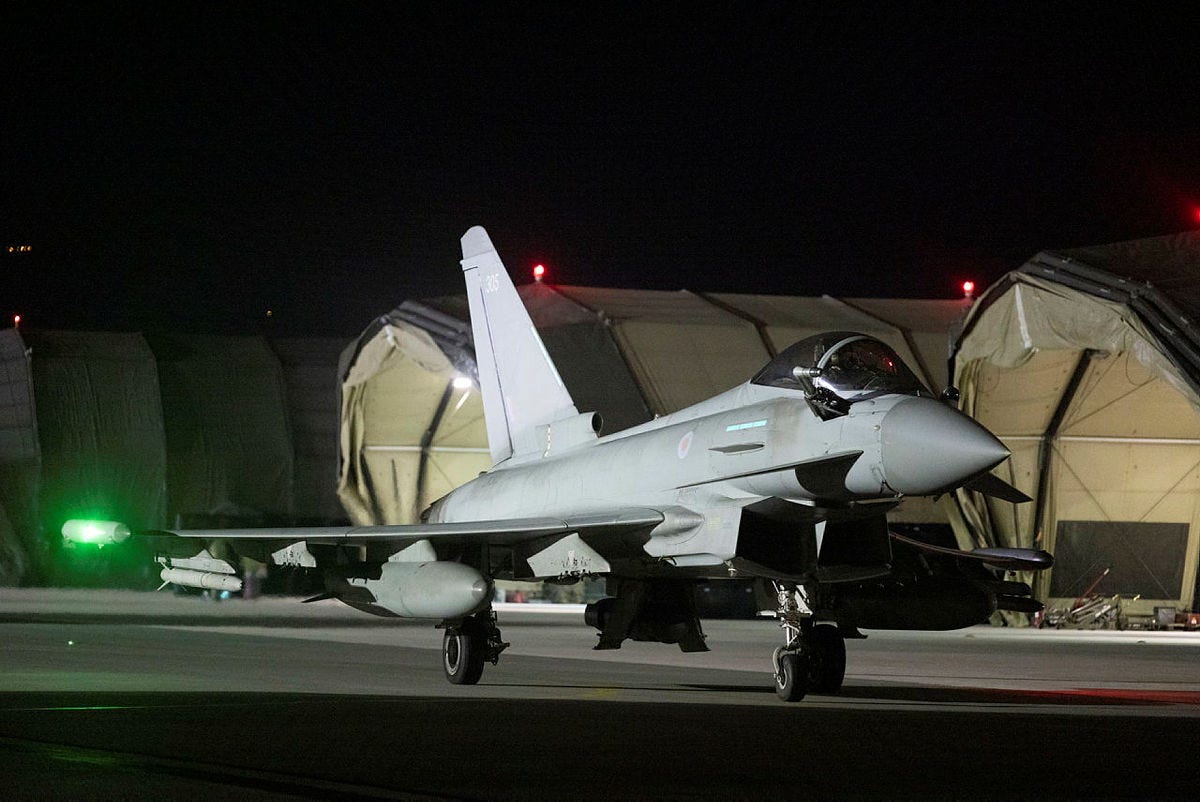

Two separate but geographically linked stories. The first is that France and the UK conducted an joint airstrike on Da’esh in Syria. This is interesting for several reasons. Firstly, it reminds us that Da’esh (may it burn in hell) is still a threat and has not been exterminated from Syria - the continued instability of the country does not help matters (see below). Secondly, France and the UK are actively working together without direct US involvement (though I wouldn’t be surprised if there was some US support as part of overall coalition efforts). This is good for Franco-British interoperability and as a positive signal that joint European military activity can occur - even outside European borders - without direct US oversight.
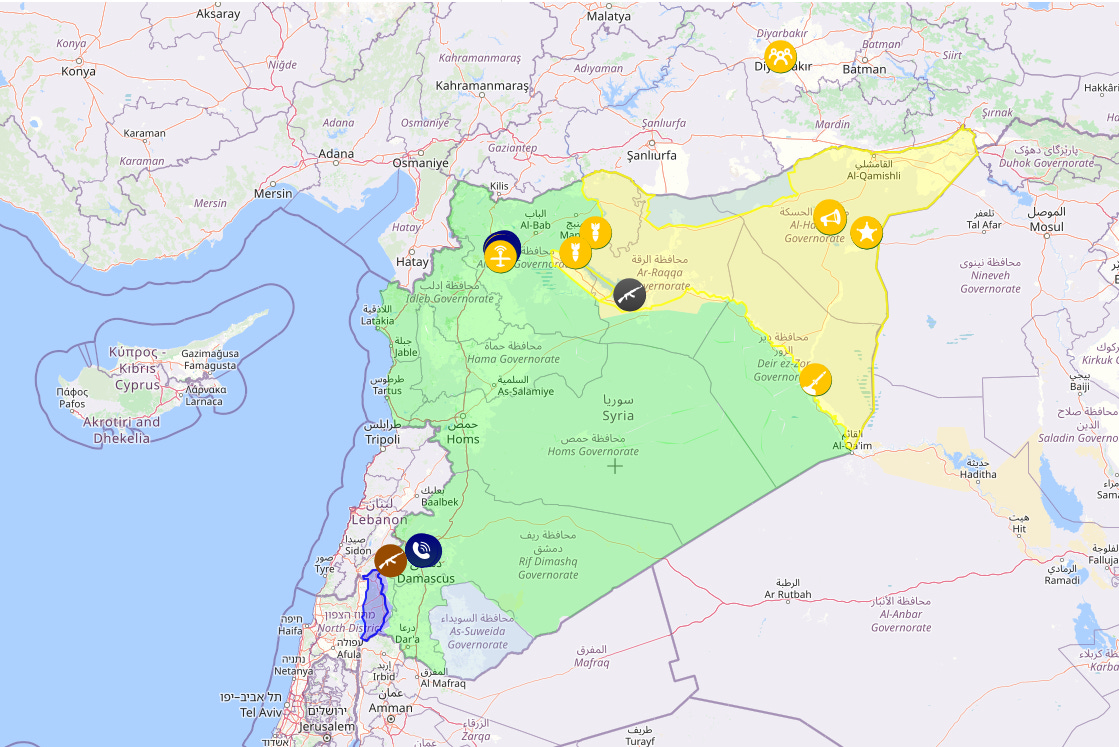
On a separate note, the Kurdish-led Syrian Democratic Forces (SDF) have clashed with the forces of the Damascus government in Aleppo. This is not unprecedented, and to an extent was expected, but is emblematic of the difficulties in forming a united and stable Syria. The western-backed SDF agreed to integrate into a broader unity government and military force back in March, but so far that has not happened. The SDF are worried about losing autonomy and military strength that may leave them vulnerable, especially to Turkiye, who see them as akin to terrorists. The Al Sharaa-led Damascus government wants integration as a first major step in uniting Syria, which effectively is split in half between two rival governments (not to mention the involvement of western powers, Israel, Da’esh, etc).
I really do hope that these clashes die down quickly and don’t escalate into anything more serious. If there is a country that needs stability and peace, it is Syria.
Yemen, Saudi and the UAE
This is a rogue one. Yemen’s civil war has been raging for over a decade between rival factions, including the infamous Houthis. These factions have had backing from different foreign powers, most notably Iran (the Houthis), Saudi Arabia (the Presidential Leadership Council), and the UAE (the Southern Transitional Council). Officially the Saudi and UAE-backed factions are on the same side, but elements have engaged in military action against each other. A Southern Transitional Council (STC) offensive last year took everyone by surprise and ended up too close to the Saudi border, infuriating Riyadh, which responded with some serious diplomatic and military action (including air strikes). The endstate of this complicated story is that the UAE has officially withdrawn all of its forces from Yemen, and part of the STC has apparently officially dissolved itself as of this morning!1
The basic takeaway from this is that Yemen is still volatile, and more broadly so are Saudi-UAE tensions. The two Gulf states have always been rivals - usually friendly - but the current disagreements are significant and open. The UAE and Saudi are economic competitors, and they also disagree on broader foreign policy objectives, including in Yemen and Sudan (where they also back rival factions). Worth keeping an eye on as the two ‘big boys’ of the Gulf monarchies really do influence regional dynamics.
France and Britain pledge to deploy troops to Ukraine
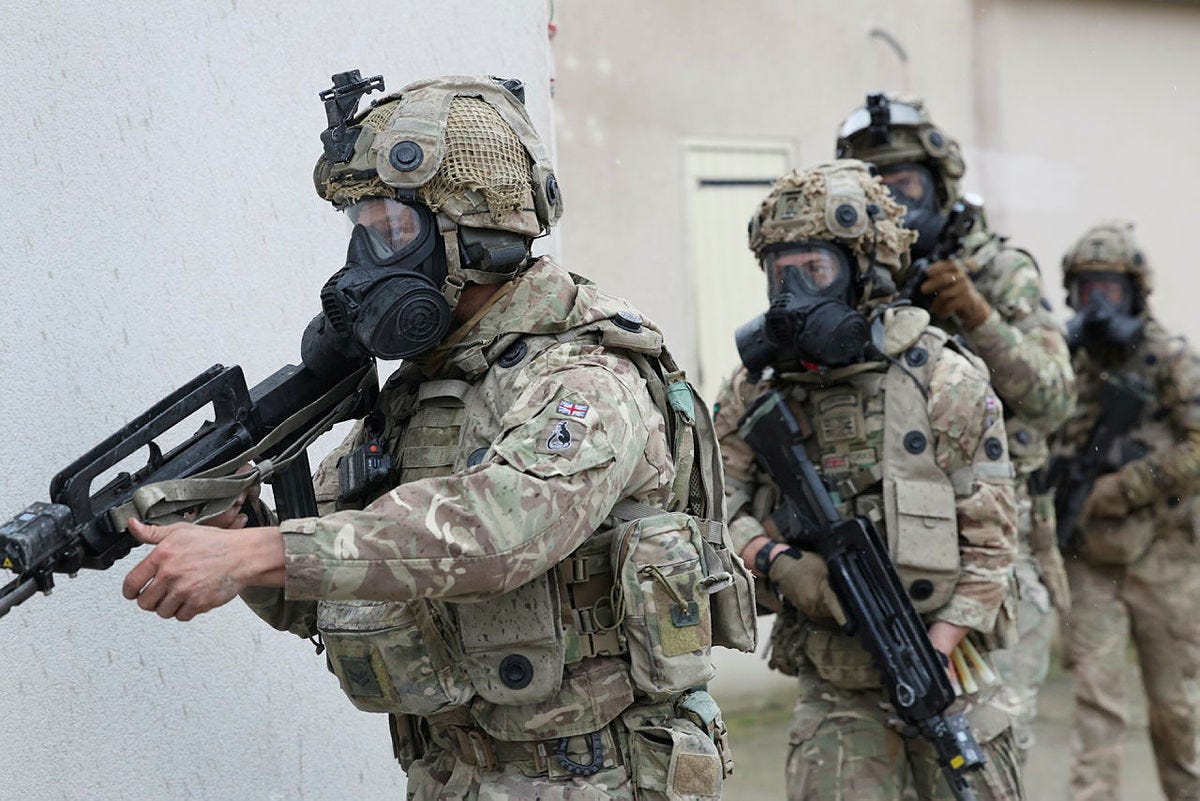

France and the UK have openly pledged to deploy troops to Ukraine in the event of a peace deal as party of a ‘Multinational Force - Ukraine’ (MFN-U). This was not unexpected, but it does matter to have it stated out loud and publicly, especially as the current British government has a habit of quibbling when it comes to defence commitments that cost money.
The devil as ever will be in the detail - unfortunately, there isn’t much of it. The official declaration states that the MFN-U will be involved in:
‘the conduct of deterrence operations in the air, on land and at sea, and the conduct of training, planning, comprehensive recovery and regeneration of forces, integration of command and control systems, as well as other jointly defined operational requirements.’
While vague, this at least doesn’t rule too much out, and includes all three geographical domains of air, land and sea. However, we still shouldn’t expect a significant military deterrence force for a variety of reasons that I have written about previously - most of my points in that essay are still extant, including the conclusion that ‘deploying an impotent token force for political reasons that falls apart at the first sign of crisis would be worse than deploying no force at all’.
That’s what I’ve been looking at this week. In a world addicted to following events in, or emanating from, the White House, I think its always good to look further afield. What foreign affairs developments have caught your eye? Let me know in the comments.
All the best,
Matthew
Cracking Defence is a reader-supported publication. If you enjoy my work, please like, share, subscribe, and if you are able, buy me a coffee to support my work. All and any support is hugely appreciated.
If it wasn’t obvious, this is very much a ‘developing story’, so expect all sorts of shenanigans over the next few hours/days.
I usually expect the winter to give my pucker factor a break.
Looking at Japan rearmament; China’s export restrictions on things of use to Japan’s military; and Japan joining the Great Game in Central Asia.
Thank you, super interesting as ever. It would be great to read your analysis on the situation in Hungary ahead of the election, especially around Russia-backed mis/disinfo and cyber attacks